
Friday, August 20, 2010

Into Southern Sudan, Part 2


Note: This is part two of a segment that seemed to long to have all as a single post. If you have not read part one, you can read it here.

Leaving the Lokichoggio airport and heading into Sudan in the Cessna Caravan, we flew over two hours of jungle, briefly inerupted by rusty earthen ribbons winding their muddy way through the dense foliage. Our first stop was to be be in the remote village of Akot (home of the Dinka people) at a hospital where we would be dropping off 4 months worth of medical supplies. We landed on a dirt strip and taxied up onto a small concrete platform. The hospital is small, there is only one doctor, and a few nurses that rotate in and out. They have facilities to manage many more patients than they have but not the staffing. They are surrounded by lush green jungle and isolated by poor roads but still people come from miles away for treatment because they are the only hospital in the area. For more information and pictures of the Akot Medical Mission, check out their website.

The back of our plane, full of supplies for the hospital.

We flew over the Nile River!

John actually got to spend quite a bit of time flying the plane.

An aerial view of the mission hospital in Akot.

Getting ready to land on the dirt airstrip.

Unloading Supplies

Some of the kids from the village came out to see the airplane and help unload supplies.


During a short tour of the hospital, we learned that while there is technically a road that they can take to get to a larger city, there is a very high chance of being carjacked, and that the roads are absolutely impassable during the rainy seasons (of which there are two, each lasting multiple months). Getting to see first hand how much this ministry is dependent on aviation has given us an eagerness to continue pressing on to the goal of serving long term in Africa.

As we were flying out, we actually saw some of this impassable road. We also saw some of the huts that the Dinka people live in.


After dropping off the supplies at the hospital, we stopped at Lopit, a Sudanese village nestled into the crook of a small mountain. We dropped off Victor, a Sudanese pastor who had been trying to get across the border back into Sudan, to bring building supplies for churches and homes damaged by the war, and had been prevented. Our stop was quick, only a few minuets, so we did not get to see what was happening there, but here is a story of an AIM missionary who is working among the Lopit people.

Perched on the side of a hill, the Lopit people build their houses very close together, much closer than in most other villages around Southern Sudan.

We had planned to land in Nagishot, a village up in the Didinga hills of southern Sudan, but unfortunately the airstrip was covered in clouds, and we were unable to land. This is an area in which there are no roads. Other than aircraft, there is no way of access for missionaries carrying the life-giving Word. Flying over this area, perched high up in the mountains, it was obvious that without the airstrip and the planes that flew into it, there would be no missionaries there. Here is a video that some missionaries put together who are serving with the Didinga people. This is a link to a Blog of a young woman serving the Didinga people with AIM.


Though our trip into Sudan was short, we were able to experience first hand how the ministry of aviation is truly serving dozens of other ministries. Our hearts feel full when we think about the privilege we have of, in a small way, being a part of such a vast array of ministries that God is using to serve Eastern Africa.

Tuesday, August 17, 2010

The hanger through a 50mm lens

Our Canon f1.8 50mm lens is great for taking close up shots, and since it was the last day at the hanger, Claire came and took a bunch of shots. So, here is a day at the hanger through a 50mm lens.


Monday, August 16, 2010

More Pictures!


Hopefully our pictures can give you more of a sense of what life is like here!

Dead chicken tied to the top of a bus. What more is there to say.

Along Ngong road. You can get pretty much any furniture made here.

Nairobi traffic...a somewhat artistic representaion.

More traffic.

While there are some nice houses around here, this is what most of the homes look like, especially outside the city a bit.

We managed to make it to the equator. We were told that for a small price we could watch a demonstration of water swirling the opposite directions on either side of the equator, but we didn't want to pay for it, so we declined.

There are chickens and roosters everyone, but this one actually looked healthy. In fact, he was the best looking chicken I have seen since we came here.

This is an Ibis. They are all over Nairobi and they make a horrendus sound. Something like a cross between a seagull and terradactyl.

I barely managed to whip my camera out in time to snap a shot of this sign. This is in a town that has lots of coffee plantations and I can't help but wonder what this hotel would be like.


There are driving schools all over, and many of them come up with odd names for their schools.


A Hindu temple. We were told that they give tours and that the inside is really interesting, but we have not gotten around to going.


A mosque, not far from where we are staying. We often hear the call the prayer multiple times a day.

Saturday, July 31, 2010

Getting outa town: Amazing Grace Church and singing with Masai

A few weeks ago we had the opportunity to take a day trip out of Nairobi, and visit some villages away from the hustle and bustle of the big city. Our guide was Pastor Mugambi. Though he is from a different tribe, he told us he felt God calling him to reach out to the Masai and start a church among them.

Pastor Mugambi drove us about an hour outside of Nairobi to Kisarian, a shanty town where he started Amazing Grace Church.

He and his wife have also started a school, though they only have pre-school through grade 2 right now. He told us he is praying for God to provide the funds to provide grade 3 and so on for the students they now serve. A man of faith, his face would light up as he told us one story after another of God’s faithfulness to him. When he first felt called to reach out to the Masai, he was given a bicycle to make the trek to the remote village where the Masai live. He would ride his bike over 25 miles of hilly terrain and poor roads just to reach them and share with them the good news of God’s love for them. He had been trekking out there a few times a week for a year when his bicycle was stolen. He prayed for God to provide another means of transportation, and after 6 months, he was given a car! Now, he travels out there often to meet with a small group of Christians, in addition to his commitment to the church in Kisarian, and the school he oversees.

Pastor Mugambi and his wife.

These are some of the kids that they have taken in.
A few images of their kitchen.
This is his office.

After visiting his church and home in Kisarian, we began the drive out to the Masai village.

Some roadside businesses
(Bycicle repair shop)

(Car Wash)

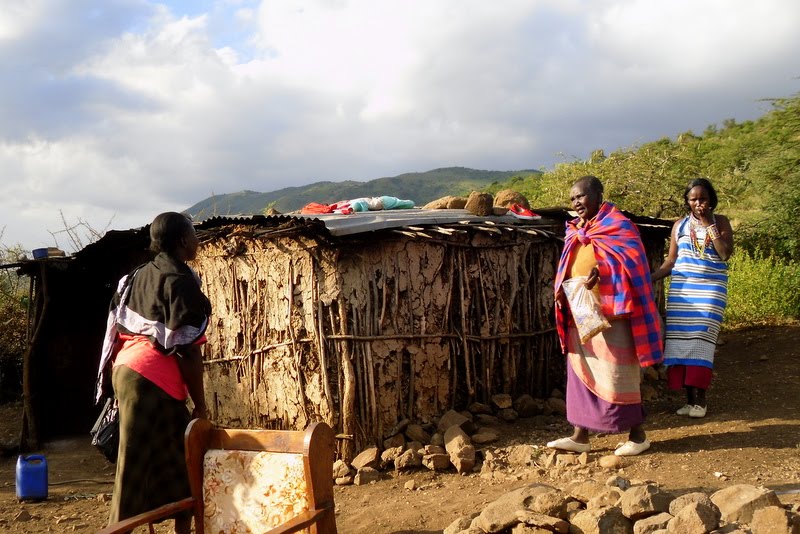
When we arrived, we were eagerly greeted by the Masai women who mostly make up the church. When we say church, we literally mean the people and not the building as they meet outside under the shade of an acacia tree. During most days, the men are all out with the cattle, so we only met one older man. John was asked to preach, right there on the spot and had to come up with something to share. Thankfully there was a translator, though we are unsure how much was actually communicated through the large cultural differences present between our world and theirs. Standing under that tree the sun blasting down on the ground those differences seemed vast as we looked through our sunglasses at a people who live all day under relentless heat. We also had the opportunity to sing with them, though we could really only clap, and try to pic up on some of the foreign words.


After singing with them, they shared with us some of the things they had made to sell, which have become one of their primary means of income, since a major drought, which led to the death of many of their cattle last year.


They also invited us into their home, a traditional mud/manure hut with rudimentary beds and a cooking area, where they served us milk from a gourd. Only a few of us partook, the rest decided it might be better to possibly offend our hosts than to carry home some strange illness. We feared drinking unpasteurized milk that had been sitting in a gourd for who knows how long, having come from potentially sick cows.

The Masai are often portrayed as an edifice of tribal culture, unchanged by the western world. They seem to represent the quintessential African tribe, with their brightly colored blankets, beaded necklaces and simple nomadic life style. However, there is a darker side to this romanticized picture.

It was not until we left the village that we learned some new facts about the Masai. While there are aspects of every culture that are good and beautiful, there are also aspects of every culture that need to be redeemed. One of the horrifying things we learned about the Masai is that 93% of them practice female genital mutilation and will marry their daughters off as young as 7 or 8 years old to whatever man is willing to pay the most cattle and goats. Men will purchase as many wives as they can afford, but then each wife is expected to construct her own mud hut without any help from the man; if she is troublesome to him in any way, he beats her. If she gives birth to a daughter, even as an infant, business deals are made to sell her off to her future husband. Boys are raised to take care of the cattle, and as soon as the boy is old enough to herd the cattle on his own, then the father gives the responsibility over to his son so he can sit in the shade with the other men and drink.

We are thankful that we were able to spend a day with these people, and though the language barriers are cultural differences made a wide gulf between us, we know that we made some friends.